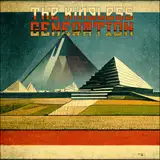
In this final session, we put the proverbial big old boulder into the sweltering primordial pond with meditations on myths of brother-sister marriage and divorce from the Kojiki (712), the taboo on sibling incest in the mother-right kinship structures of Trobriand Islanders as seen in the anthropology of Malinowski and his debates with dogmatic Freudians in the 1930s, and finally the persistent postwar Japanese cultural theme of Japan as hotbed of incestuous “bed-creeping” (yobai), a feat...
2025-08-13 02:58:36 +0000 UTC
View Post
This time we hit our stride, discussing the interplay of Indigenous state and deep state, chief and secret society, sometimes in resistance to colonization and sometimes in service of comprador opportunism—though as Nathan points out, which it might be in any given moment is worked out through a collective mythopoetic process.
2025-08-02 04:34:36 +0000 UTC
View Post
Nathan, AKA KUBARK Stare, @postcyborg on Twitter, and an organizer of a film club in London which listeners should check out, joins me for a conversation about noided proletarian filmmaker Imamura Shōhei’s 1968 film Profound Desire of the Gods. Former Ozu disciple Imamura rejected the neat and clean nationalist family values of his early mentor to explore the deepest and most powerful forces slumbering fitfully at the bottom of fourth-reich Japanese society. Here he goes back to the “daw...
2025-07-23 02:57:25 +0000 UTC
View Post
I have several episodes in development, but each one I feel like I need to read at least one more book before it’s ready, so for now, some newsy musings on current events mostly in Japan, where this weekend’s election sees a far-right populist party set to pick up a dozen seats: Sanseitō, whose draft constitutional amendments would abolish all individual rights and invest sovereignty in the state and not the people, and which is heavily astroturfed by all the usual suspects, including no...
2025-07-17 07:00:28 +0000 UTC
View Post
Sina Rahmani of The East is a Podcast and Red Media had planned to come on the show before this, and in light of the Zionist entity’s unprovoked attack on his ancestral country of Iran in violation of international law I offered him every chance to back out, but hardworking podcaster that he is, he joins us for some light vibing and riffing and unstructured meditations about, among other things, the unexpected similarities between the entity and postwar Japan, as well as the bright future t...
2025-06-19 06:30:44 +0000 UTC
View Post
It’s a pungent bouquet of TED Talks! A blast from the past! Some shots from the aughts! Put on your Pynchon goggles, your Mabeuf plague mask, and your Cuttlefish gloves, because we’re opening up this most dracular document of the moment before the long 2014.
P.S. The episode art is from the actual cover art of the book in question, and it’s tragic that I neglected to discuss it: You there, third-world comprador! Walk on with me, deeper, yes, deeper, into ever darker post-apocalypt...
2025-06-06 06:36:19 +0000 UTC
View Post
If you had a male-coded childhood at all recently in the Anglo-American world, you have felt the influence of the Soldier of Fortune culture of the 1980s, within which martial arts and other action films featuring Silvester Stallone, Chuck Norris, and Steven Seagal were prominent, and accompanied by dojos proliferating even in mid-sized American towns. But what you may not know is that, like the sushi boom around the same time period this shadow-reich version of the East Asian martial arts wa...
2025-05-29 09:46:57 +0000 UTC
View Post
Fujisawa Takeo, “Ryūkyū’s Weapon,” December 1929, trans. Fergal Schmudlach
Karate has become very famous for its overwhelming power. In the Faculty of Medicine at Kyoto University, apparently they went so far as to invite masters in that Way to come from Ryūkyū so they could illuminate and clarify the power of karate academically.
As many people know, karate is a form of boxing, a unique cultural property born in Ryūkyū. It’s a technique for protecting yourself and d...
2025-05-25 13:15:38 +0000 UTC
View Post
A supplement to an upcoming episode.
Kataoka Teppei, “We Got Strong Guys,” June 1929, trans. Fergal Schmudlach
X
That guy does Judo, he’s got a strong Yankee fist [Meriken], and even what they call that China hand technique [唐手術 Kara-te jutsu], Yaegaki style or whatever, he’s an incomparable master at that. This fucking guy, his name is Shinsuke…
I don’t know where he come from. Anyhow, was it 1925, or maybe the following Spring, Shinsuke come wanderi...
2025-05-25 07:43:51 +0000 UTC
View Post
2025-04-07 22:35:49 +0000 UTC
View Post
What is the difference between East and West? One helpful line to draw is that between Iranian and Indo-Aryan cultures, as seen in the extremely ancient traditions of the Avesta and the Ṛigveda, respectively. Whereas the common Indo-European heritage of multiple generations of gods (ahuras/asuras vs daēwas/devas, see also titans vs gods—which, as long as we’re painting with broad brushes, we might imagine have something to do with memory of past relations of production as “ages”) i...
2025-04-03 11:47:45 +0000 UTC
View Post
I know, I could have started a different feed for the Japanese language stuff, but that feels superfluous given that I’m not sure how much interest it’ll even attract, and even if it were to take off, surely it would be better to keep everybody together in one big, happy Kingless Generation, whatever language we may use. Hypothetical Japanese listeners would almost certainly be interested in hearing English episodes, too, and interacting with you all, anyway.
Recording and then obse...
2025-03-19 11:11:08 +0000 UTC
View Post
人類30万年。その大半を占めるさまざまな平等・自由・創造性ある先「史」社会、そして穀物国家における階級闘争五千年のごく小さな誕生。
2025-03-19 08:41:22 +0000 UTC
View Post
To introduce Kevin Gaijinson, the show’s new Japanese language host, I share an old conversation with him from back when he was still a raging weeb spreading Anglo-American imperialism in blissful ignorance while speaking better Japanese than the Emperor, gambling with the yakuza, and teaching very special English lessons to the bored housewives of the rich and powerful. He began a journey that day that led him to become a member of the Kingless Generation, and now that he is between jobs a...
2025-02-14 13:03:12 +0000 UTC
View Post
At the end of the ancient mythology section we discussed last time, the Popol Vuh (here paralleled by the Title of Totonicapán) depicts the restoration of militaristic class society in the K’iche’ corner of the Maya world in the 13th c. CE, after some centuries of relative freedom and equality following the overthrow of the Classic Maya around 950. The founders of the new ruling class are an itinerant, mountain-dwelling secret society who begin their atta...
2025-01-10 07:40:19 +0000 UTC
View Post
Before the dawn of what I hope will be a much more productive year for the podcast, join me in a warm and toasty room for some green tea, guitar, and guileless meditations.
2024-12-27 07:51:03 +0000 UTC
View Post
I did it, folks: I returned to the burning bouncy castle that is the small town settler entity on Turtle Island. In between fulfilling various karmic obligations and reconnecting with fellow settlers, relatives and friends on both sides of the Trump/Kamala cultic divide, I managed to do some real-life investigation of Indigenous reservations, visiting museums and cultural events, albeit in a shallow, short-term capacity. Herein I share some musings on this experience of questionable depth but...
2024-08-29 03:07:51 +0000 UTC
View Post
I did it, folks: I returned to the burning bouncy castle that is the small town settler entity on Turtle Island. In between fulfilling various karmic obligations and reconnecting with fellow settlers, relatives and friends on both sides of the Trump/Kamala cultic divide, I managed to do some real-life investigation of Indigenous reservations, visiting museums and cultural events, albeit in a shallow, short-term capacity. Herein I share some musings on this experience of questionable depth but...
2024-08-29 02:59:48 +0000 UTC
View Post
The first half of the Popol Vuh as we have it from the Kʾicheʾ colonial tradition is a quintessentially Kingless epic, as the story revolves around pre-human gods, successive generations of hero twins, who must defeat a series of aggrandizer figures, including the lords of death in the underworld, in order to bring about the dawning of the human age. Although the same basic story can be found in earlier art and hieroglyphic inscriptions which since the 1990s are being decipher...
2024-07-26 08:23:55 +0000 UTC
View Post
In a series that I hope will include Martin Bernal’s classic Black Athena (about the modern British fabrication of “ancient Greece” and its true roots in ancient Egypt), we start with the East: in recent decades, great advances in Hittite studies have illuminated much of the mechanics of transmission of Mesopotamian literature and religion to a nascent Greece from a grain state in Anatolia (modern-day Turkey) which used cuneiform writing (in addition to their own distinctive hieroglyphs...
2024-05-24 05:47:42 +0000 UTC
View Post
These days I find myself irresistibly drawn to the music of the last revolutionary juncture in world history, the funk and soul of ca. 1970. There’s some revolutionary legacy to be named and claimed here: maybe that’s why so many glossy yacht funk bands have been promoted in recent years, some featuring hard social Darwinist and eugenic themes which are prime targets for analysis on the podcast. If you’re feeling it, reclaim this groove and struggle in righteous confidence for the liber...
2024-05-21 02:11:12 +0000 UTC
View Post
A close reading of “The Playboy Dialect,” a classic sharebon, or narrative of fashion and manners in the pleasure quarters of Edo-period Japan, where a consumer culture, to rival anything concocted by the capitalist dictatorships of the Century of the Self, was wielded as a weapon of class struggle by the rising urban commoner class against the de facto feudal rulers, the samurai.
2024-05-02 07:27:03 +0000 UTC
View Post
The rise of ancient empires in the Eurasian continent ushered in the Axial Age, with its ideologies of absolute good and evil and the promise of revolutionary recompense for unheard-of oppression by the Occupiers of the Earth (שכני הארץ). The books of 1 Enoch and Jubilees, quoted by name in the New Testament, still contained in the Bible of the Ethiopic churches, and exerting a massive influence over the entire Christian view of human history, have recently been re-edited and re-trans...
2024-03-13 06:19:37 +0000 UTC
View Post
I thought I had a hot take in response to the Little Mermaid discourse last year, but predictably I’m not the first one to think of reading the Isle of Venus in Camões’ Lusiads against the Age of Exploration diary entries in which roving European savages discuss their adventures in more complex Indigenous kinship structures where sex was not commodified and the family was not specialized to pass down private property—as well as (what one suspects was actually much more common) rolling ...
2024-02-19 07:15:36 +0000 UTC
View Post
The antisemitic, Nazi-adjacent ideology of Zionism says that members of the Jewish religion must be uprooted from their ancestral homelands and gathered into a white supremacist settler colony ruled by Jews native to Europe—a new kind of crusader state. And like the crusader states, at the behest of their Euro-American masters, the Zionist entity practices the fascist economics of nomadic destruction and chaos, taking the lead in illicit trade in weapons, drugs, and human beings. We are joi...
2024-02-13 04:21:36 +0000 UTC
View Post
In the final installment of the series, we cover all that is known about the mysterious death of this strangely GLADIO-brained scholar of classical Japanese literature and favorite translator of “aesthetic terrorist” Mishima Yukio.
2024-01-23 07:14:38 +0000 UTC
View Post
We explore the Windsor Free Festival, Sunday Head, Albion Free State milieu of hedonist, individualist, libertarian (and decidedly anti-communist) radicalism in 1970s Britain, led by figures like Ubi Dwyer, Sid Rawle, and Paul Pawlowski, as well as scions of elite families like Heathcote Williams and Nic Albery—in light of the fact that, as we have already seen, Nic Albery and his movement appear in Nobuko Albery’s semi-autobiographical novel merged together (and not-so-subtly equated) wi...
2023-12-21 13:13:35 +0000 UTC
View Post
We introduce basic rhythm and chording patterns for ‘American’ pop music, which stem from the New African Church, as well as perhaps Irish uilleann pipe drones which scintillate back and forth, moving only a few notes at a time, and then taking on the rhythm of steam-powered machinery like the locomotive engine, around which the working class lived and breathed. In the song in question, Claude François, low-brow French pop star that he was, uses this medium to sing nostalgically about th...
2023-12-14 03:11:54 +0000 UTC
View Post
From the semi-autobiographical novel of Ivan’s second Japanese wife, Nobuko Albery (née Uenishi), we have some very sardonic portraits of the Morrises and their upper-crust left-wing milieu in France, as well as a fascinating subplot involving a drug-trafficking, blue-blooded hippie cult leader character who seems a fusion of Mishima Yukio and Nic Albery, the son of Nobuko’s elderly second husband and a pioneering figure in post-left radical politics and early internet-style social exper...
2023-12-13 05:36:51 +0000 UTC
View Post
From 1956 through 1966, during which time he moved from London to Tokyo to New York, Ivan was married to the ballerina Ogawa Ayako, known in the society papers—by analogy with Jackie (Kennedy)—as Yakkie. In the realm of ballet, where other important Cold War battles were fought such as securing the defection of the Tajik dancer Rudolf Nureyev from the Soviet Union, Ayako became one of the first Japanese to work at the highest levels, then returned to Japan to spread her knowledge to a new...
2023-11-30 07:00:15 +0000 UTC
View Post